
عینک eyewear

درباره سایت
آخرین مطالب
- Phantom Vision / Phantom Eye Syndrome
- Vision Stamina and Concussion
- Retinal Tear
- A Theory of Frozen Light
- ? What is Corneal Densitometry (CD)
- ? What are green lenses good for
- the Pars Plana
- Blind Spot Test
- Residual Astigmatism
- Transient Light Sensitivity Syndrome (TLSS)
- health problems associated with computer use مشکلات سلامتی مرتبط با استفاده از کامپیوتر
- decentered ablation correction
- night vision problems after lasik prk epi lasik surgery مشکلات رانندگان لیزیک شده در شب
- eye care after birth مراقبت چشمی پس از تولد
- blue light and blue light control lenses عدسی های کنترل کننده نور آبی
امکانات وب
A retinal tear or break happens when the gel-like vitreous in your eye pulls on your retina and causes a split. Your retina is a thin layer of tissue that’s sensitive to light found at the back of your eye.
A retinal tear isn’t the same as a retinal detachment. A retinal tear could lead to a retinal detachment if the tear isn’t treated. A retinal detachment happens when the retina pulls away from the tissues that support it.
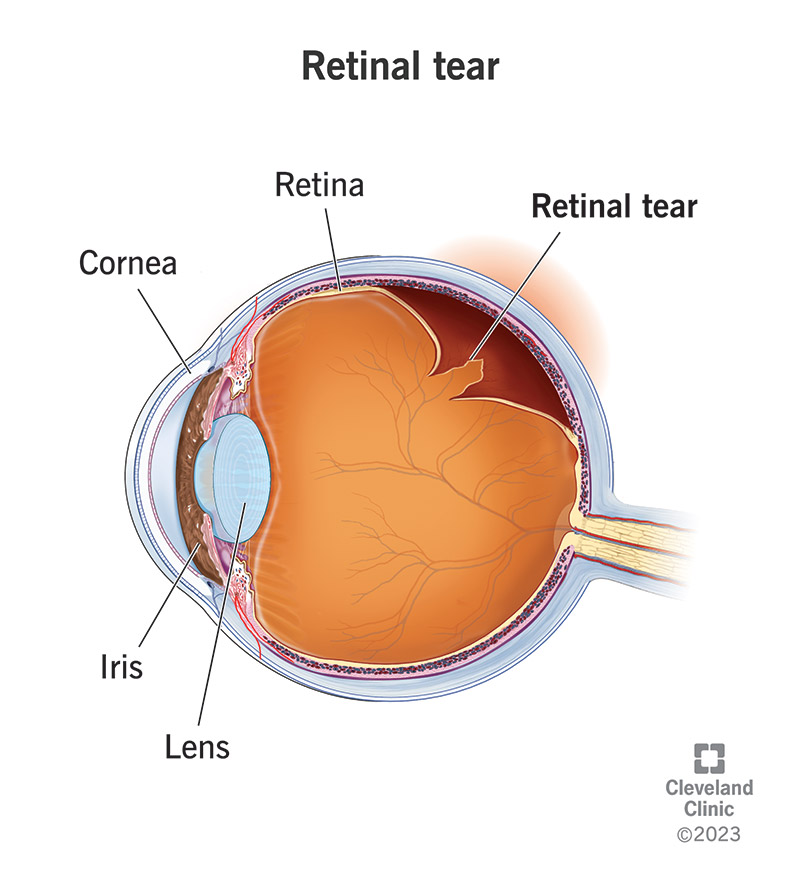
You can also develop a hole in your retina when your retina gets thier. Retinal holes are less likely to lead to retinal detachment.
Retinal tears and any injury that damages your retina threatens your eyesight and is a medical emergency. Contact your eye care provider as soon as you have retinal tear symptoms or any type of eye injury.
How common is a retinal tear?
Retinal tears are common, with nearly one in ten people developing one at some point during their lifetime. Retinal detachments, on the other hand, are less common, occurring in approximately one in 300 people.
Can stress cause a retina tear?
Even though stress can't cause retinal detachment, it can be harmful to your eye health in other ways. In addition to cortisol during times of stress, the body also produces epinephrine or adrenaline. This causes the pupils to dilate so you are able to see the world more clearly and be protected from danger.
A retinal tear is less severe than a retinal detachment, but you still may need treatment. You probably won’t feel pain, but you may have blurry vision and a lot of eye floaters and light flashes. Your provider can repair a tear before it leads to a detached retina.
Symptoms of a retinal tear may include:
You might have a retinal tear and have no symptoms.
Retinal tear causes include:
What are the risk factors for retinal tears?
Risk factors for retinal tears include:
Reference:
برچسب:
نویسنده: حامد شمس